More PDFs Cannot Fix the $20B Lending Industry Fraud
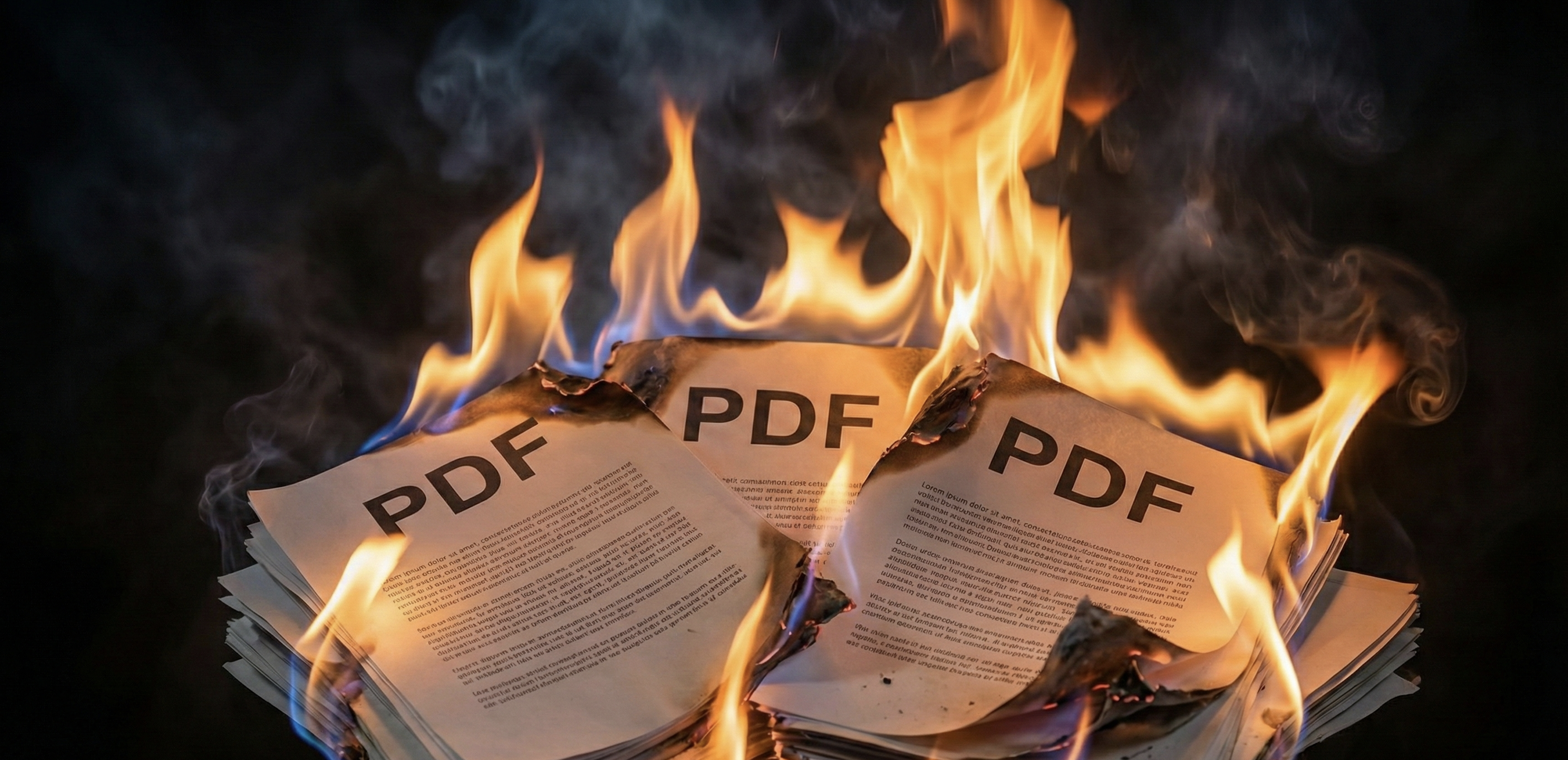
Over the last year, I've talked to dozens of lending teams about verification. The conversations follow a pattern: fraud losses are accelerating, detection systems aren't keeping pace, and the response is to add more document requirements.
That's not a solution. That's the problem compounding itself.
The verification model is fundamentally broken
Here's the core issue: AI-generated documents now fool 80-90% of detection systems. Synthetic pay stubs pass manual review. Fabricated bank statements clear automated checks. A convincing tax return costs $50 on Fiverr and takes minutes to generate.
But this isn't just an AI problem. It's an architectural flaw that AI exposed.
Documents are proxies for truth. A pay stub isn't income—it's a representation of income rendered as pixels or print. A bank statement isn't assets—it's a point-in-time screenshot of a database entry. These proxies functioned when fabrication required skill, time, and risk. The cost-benefit math discouraged most fraud attempts.
Generative AI collapsed all three barriers simultaneously. The verification model didn't become slightly weaker. It became structurally indefensible. Detection systems are now engaged in an asymmetric arms race: every improvement in fraud detection is met with a corresponding improvement in fraud generation. Offense scales faster than defense. The math doesn't resolve in the lender's favor.
First-principles rethink: what is verification actually trying to accomplish?
When a lender requests a pay stub, they don't want the document. They want confirmation of a fact: this person earns X dollars. When they request a bank statement, they want confirmation: this person has Y dollars in liquid assets. The document is an intermediary—a proxy for the underlying data.
So here's the question I keep asking: what if you verified the fact directly, without the intermediary?
A borrower's credit score exists in Credit Karma's database. Their bank balance exists in their bank's system. Their income history exists in their employer's payroll platform. This isn't document data—it's source data. The authoritative record.
Verification at the source
The infrastructure now exists to verify this source data directly—without asking borrowers to upload anything.
Borrower connects their Credit Karma account. Within seconds, a tamper-proof verification confirms "credit score ≥ 700." Borrower connects their bank. Verification confirms "balance ≥ $10,000." No screenshots. No PDFs. No documents that can be fabricated. Just verified facts, pulled directly from the source, cryptographically secured against forgery.
The borrower controls what gets shared. The lender gets mathematical certainty about the claims that matter. No credentials stored. No sensitive data retained. Verification in seconds, not days.
AI can generate a convincing pay stub. It cannot fabricate a direct verification from Credit Karma's servers.
This isn't theoretical
3Jane, a lending platform backed by Paradigm, Coinbase Ventures, and Wintermute, built their entire credit underwriting system on this approach. No document uploads. No pay stubs. No PDFs. Borrowers connect their accounts via Reclaim Protocol, facts get verified at the source, credit lines get extended.
The results after 30 days: $850K in loans originated. 0% default rate. 68% of borrowers were first-time users of the platform. Zero document fraud incidents—because there were no documents in the system to fake.
That's not luck. That's what happens when you design fraud out of the architecture instead of trying to detect it after submission.
The paradigm shift: detection → design
Most fraud prevention operates on a detect-and-respond model. Documents come in, systems scan for anomalies, humans review flagged cases, fraud gets caught (sometimes) after the fact.
This model has a ceiling. When synthetic documents are statistically indistinguishable from authentic ones, detection becomes probabilistic at best. You're not stopping fraud—you're sampling it.
Design-based prevention works differently. When verification happens at the source, in real-time, the attack vector disappears entirely. There's no document to fabricate because documents aren't part of the flow. Fraud isn't caught after the fact—it's prevented by architecture.
The choice facing lenders
This isn't a future-state discussion. The infrastructure exists today. The implementation is proven. Lenders face a decision: continue investing in detection systems that are structurally outmatched, or eliminate the attack surface entirely by moving verification to the source.
The first path is familiar. It's also losing. The second path requires rethinking assumptions—but it's the only one where the math works.
If you're building in lending, insurance, or underwriting and want to understand how source-level verification integrates into existing workflows, reach out. Happy to walk through what implementation looks like.
AI can forge any document. It cannot forge a verification pulled directly from the source.
Let's Talk
If you have any questions or want to discuss more about how this can help you, schedule a call with us.